Over the next 30-40 years, the there was a major push for screwworm eradication in North America. It was driven out of the US in the 60’s. With enormous international cooperation, they were pushed out of Mexico and Belize in the 80’s and eradication was pushed down to Panama by the 1990’s.
By a happy accident of geography, Panama was an excellent choke-point for the screwworm eradication. We could effectively maintain a screwworm border in Panama with a minimal effort because the geographic area to sterilize was physically small and politically stable. This also meant that screwworm control could be maintained through limited screwworm production facilities based in Panama and managed by COPEG, a joint commission between Panama and the US. COPEG is an institution specifically founded to maintain control over the screwworm barrier in Panama.
It wasn’t plausible to push screwworm elimination past Panama for a number of reasons that include political instability and the fact that Brazil is an enormous and terrifying place.
But then something went wrong.
Here it is: “The screwworm barrier in Panama cost $15 million a year. This is zero dollars to the US government. This program was basically free and it protected an entire continent from billions of dollars of yearly damage.”
And it seems to have gone to hell in 2022-2023 under the Biden administration, when “They were almost certainly transported via unchecked northward migration of people and animals.”
Governments Sell Bonds At Record Pace As Global Rates Rise, Spending Soars
In a world already drowning with debt, the only certainty is even more debt
According to a new analysis by Bloomberg, governments are borrowing from syndicated bond markets at a record clip as public spending surges. That's in addition to direct sales where the government auctions off debt to institutional investors and individuals.
Sovereign issuers have sold $504 billion of the debt - which is offered to investors via banks - so far this year, a new record. Thet's more than in the first half of 2020, when in a global emergency nations were paying to support their economies during Covid-19 lockdowns.
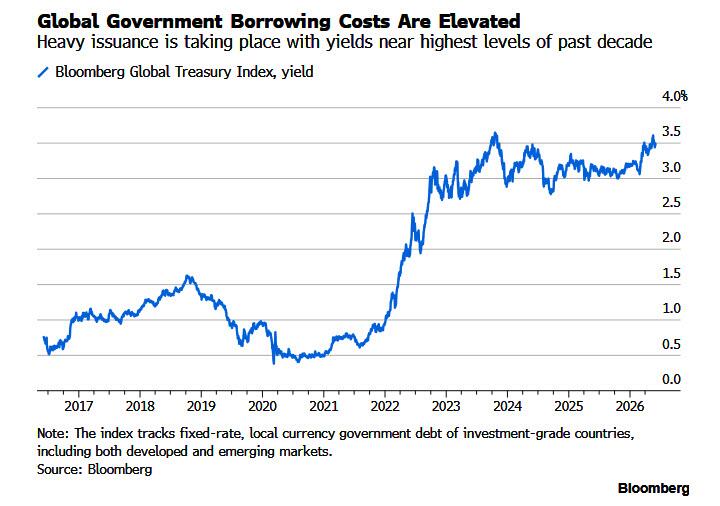
Budget deficits have been climbing since the global financial crisis. They spiked during the pandemic, when interest rates were slashed to record lows, and are widening again as governments boost defense spending and try to protect households from price shocks driven by the Iran war. Aging populations and rising interest rates are adding to the pressure.
“The main driver of the supply is basically increased public spending, and thus bigger funding needs,” said Jens Peter Sorensen, chief analyst at Danske Bank, pointing to greater outlays on the military, infrastructure and transition to cleaner energy.
Germany and other nations have been setting aside hundreds of billions of euros for weapons and ammunition, and the EU has relaxed its rules to allow extra spending on defense and energy initiatives that curb consumption of fossil fuels.
AS noted above, the sums raised from syndications are dwarfed by debt sold at regular government auctions, not least because the US Treasury only uses the latter to issue bonds. But hiring banks to sell offerings to investors is popular elsewhere, especially in Europe. It can be a less risky option when markets are volatile, and give debt managers greater control over the timing of the sale.
According to Bloomberg, for eight of the last 10 years, Italy has been the biggest borrower in the market for sovereign syndications. It is leading again in 2026, having already raised nearly €70 billion ($81 billion) in the first six months. Germany, which eliminated its famous "debt brake" and rewrote its fiscal rules to splurge on defense and infrastructure, raised €14 billion from three syndications so far this year, while the UK, Belgium and Serbia sold their biggest-ever deals. Australia and Mexico are among this year’s top 10 issuers.
Since demand for government debt remains strong, particularly for shorter maturities, governments are seizing the chance to work through a busy refinancing schedule and fund higher spending despite an uncertain path for interest rates, said Johnathan Owen, a portfolio manager at TwentyFour Asset Management.
“They’re using this window while markets are healthy and willing,” he added.Of course, the more markets are "healthy and willing" the bigger the eventual revulsion will be when investors realize they have loaded up to the gills with another batch of debt that will never be repaid.
Meanwhile, as the inflationary shock of war in the Persian Gulf has driven up yields, the outlook for the global economy has deteriorated, scrambling predictions for rates. The European Central Bank is set to deliver its first hike since 2023 this week and the US Federal Reserve is expected to tighten monetary policy later this year, although what happens thereafter is less clear.
US Treasury auctions suffered from elevated rate market volatility in March, immediately after the start of the conflict. There have been few signs since that investors are losing their appetite for debt, but they are asking for more in return. A 30-year US bond auction in May was the first since 2007 to draw a yield higher than 5%. Meanwhile, the UK’s £15 billion ($20.2 billion) offering in April drew record orders from buyers attracted by the highest yield on 10-year debt since 2008.
Fueling the increase in issuance are higher than normal redemptions, as Covid era bonds begin to mature. Analysis by Natixis SA shows that refinancing deals by euro-area sovereigns have jumped by 26% in 2026, outpacing the 11% year-on-year increase in total syndicated issuance.
“This gap suggests the record first-half is primarily redemption-driven rather than opportunistic front-running ahead of potential rate hikes,” said Theophile Legrand, a rates strategist at Natixis, in comments made at the start of this month. Still, there are signs that some European borrowers may be looking to lock in costs before they rise, based on recent trends.
In May, “redemptions actually declined year-on year, yet syndicated volumes jumped from €32 billion to €45 billion, suggesting at least some degree of opportunistic front-loading,” Legrand added.
According to Bloomberg, the pace of issuance for the rest of the year will depend on what central banks do next. Syndications from Belgium, Spain, Austria and Portugal in May were “earlier than anticipated,” ING strategists including Benjamin Schroeder wrote in a June 3 note. Others are getting in ahead of the summer slowdown. Greece is tapping the market for €3 billion, garnering more than €36 billion of orders for a reopening of existing notes due in 2036. Meanwhile, Sweden is raising €2 billion of three-year debt. Both deals should price on Wednesday.
“There’s still plenty of euro zone sovereign debt to come to market in the second half of the year,” said Harvey Bradley, head of global rates at Insight Investment. And that's just the start, because after the second half, there will be even more debt every year going forward as record amounts of syndicated debt, both for new issuance and refis, come to market to fund a fiscal model that no longer works.
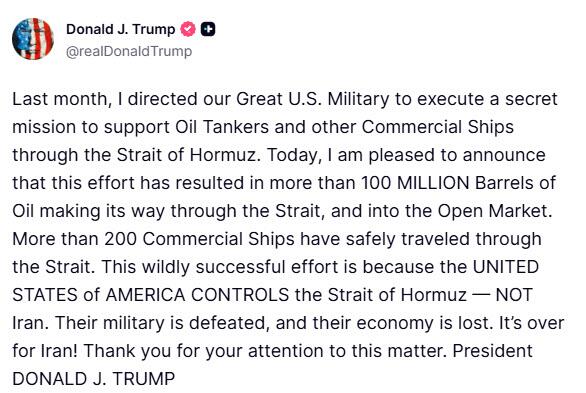
In any case, Trump added that "this effort has resulted in more than 100 MILLION Barrels of Oil making its way through the Strait, and into the Open Market. More than 200 Commercial Ships have safely traveled through the Strait," which would explain why oil prices have remained low and confirms what Goldman's Delta One head, Rich Privorotsky, wrote this morning, namely that "a lot has been thrown at the oil market and it’s simply not going up, which is remarkable given the level of escalation. The only conclusion that really fits the price action is that barrels are still getting through the Strait of Hormuz, visibly or otherwise. There doesn’t seem to be a more rational explanation."
"This wildly successful effort is because the UNITED STATES of AMERICA CONTROLS the Strait of Hormuz — NOT Iran" Trump concluded.
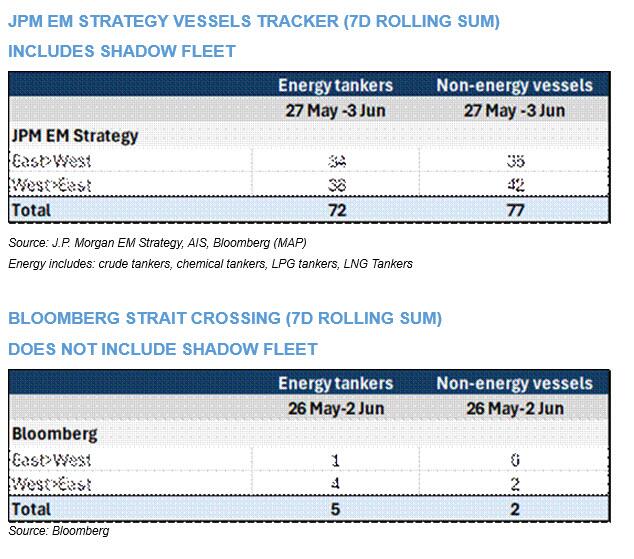
Trump's post also validates what JPMorgan EM strategy team pointed out a week ago, namely that ship - and crude - transits are far higher than what official trackers have indicated:
New higher equilibrium appears to be established in Strait with vessel crossings remaining in the c.25 per day mark for nearly a week, according to JPM EM Strategy methodology.
Estimated energy exports continue to be very strong - around 3.6 mbd over the past two days and the 7DMA remaining around 2.5mbd. This has been driven by strong refined chemical tanker transits which have risen to more than 50% of pre-conflict levels.
Reports that US are quietly coordinating with shippers to ensure safe transit without explicit escort.
Here, JPM suggests that Bloomberg's data is showing muted transits as it can't keep an accurate read of actual crossings due to AIS transponders being turned off during crossings.
Now the question is whether Iran, whose leverage in the conflict would be viewed as dramatically reduced as a result of this development, will allow stealthy tankers and other ships, with transponders shut, to continue crossing the strait affirming Trump's implicit claim that the country no longer has control over the strait, or if Tehran will make a public demonstration of how much control it still has.
The final countdown for America’s 250th birthday is on. Families will be planning road trips, parades, vacations, reunions, and cookouts to celebrate the greatest nation in history. But in six states, politicians have a different idea for the party: raise taxes.
Beginning July 1, drivers in California, Washington, Illinois, Maryland, Virginia, and Mississippi are scheduled to see higher state gas taxes. In other words, as the country prepares to celebrate casting aside a tax-heavy king in favor of freedom, these states will use the occasion to fatten government coffers one gallon at a time.
The worst offenders will be no surprise. California, Washington and Illinois — we’ll call them the Axis of Glut.
Their governors are often the first to fake outrage when gas prices rise. They blame oil companies. They blame “price gouging.” They blame world events. They blame everyone except the politicians who keep piling taxes, mandates, and regulations onto every gallon drivers buy.
Yet these same states already have some of the worst gas prices in the nation, some of the highest gas taxes in America, and now they are getting ready to raise those taxes again.
California’s gas tax is already the highest in the country and is scheduled to climb again on July 1, from 61.2 cents to 63.4 cents per gallon, under the state’s annual inflation adjustment. The same report noted California’s average price for regular gasoline was nearly $6 per gallon in early June.
Illinois is no better. The state says its motor fuel tax will rise on July 1 because the law requires an annual inflation adjustment. Washington joined the club with a gas tax increase last year and then baked in automatic increases going forward. Starting July 1, 2026, the state’s fuel tax rises by 2% every year unless lawmakers change the law.
This is the dirty hustle behind inflation-indexed taxes. Politicians get to raise taxes without holding a press conference to admitting it. They pass the law once, then every year drivers get mugged by a formula.
As of June 8, the national average for regular gas was $4.164, down 38.2 cents in a single month. That is welcome relief for families, workers, small businesses and anyone trying to get through summer. But the national average would look even better if it were not being anchored down by tax-heavy states that treat drivers like a rolling ATM.
The problem is not limited to the six July 1 tax-hike states. Seven of the ten most expensive states for gas are run by Democratic governors. That is not a coincidence.
Taxes play a major role in the high-price reputation of many of these states. So do their regulatory regimes, special fuel rules, anti-energy policies and climate mandates that make fuel harder to produce, refine, transport and sell.
The result is predictable.
Families, small businesses, truckers, and farmers all pay more. Then the same politicians who helped drive up the cost pretend they are shocked by the bill.
That is not compassion. That is government gluttony.
Supporters claim the money goes to roads and infrastructure. But that excuse only goes so far. Every tax increase is sold as necessary. Yet somehow the burden always lands in the same place: on the people who drive to work, school, church, the grocery store or a summer vacation.
That is what makes the timing so perfect, and so insulting.
America’s 250th birthday should be a celebration of freedom, independence and the rejection of government overreach. The American Revolution was born from the idea that people should not be treated as endless revenue sources for rulers who never seem to have enough.
Nearly 250 years later, millions of drivers will pull into gas stations in California, Washington, Illinois, Maryland, Virginia, and Mississippi and get a reminder that some politicians still have not learned the lesson.
The country is moving toward a better energy future: lower prices, more production, more reliability and less punishment for the people who keep America moving. But these six states are choosing a different path.
America 250 should remind us why this country was born: because free people eventually get tired of being treated like revenue.
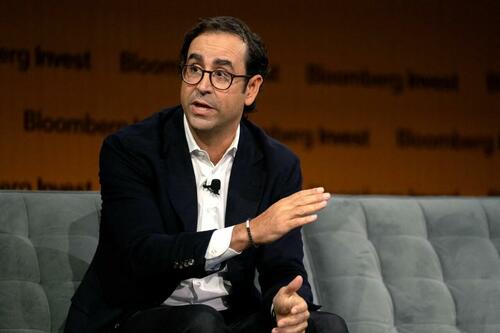
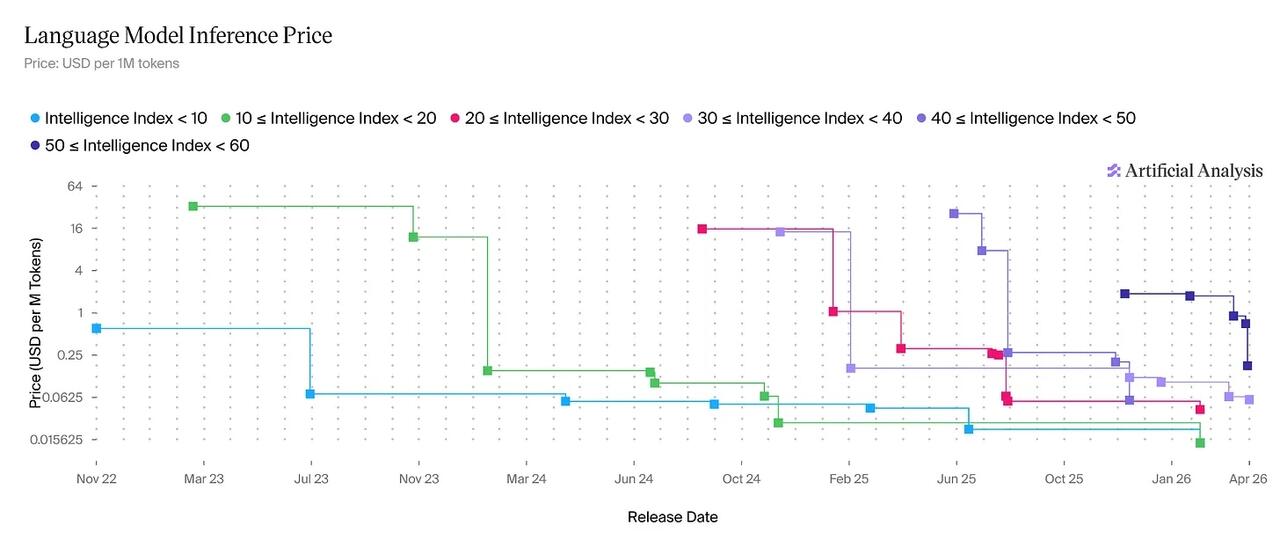
John Zito, co-president of Apollo Asset Management, sat for a fireside chat at the Morgan Stanley US Financials Conference on Wednesday, where he suggested to Bloomberg that measured per unit of intelligence delivered rather than per token, prices are collapsing - even as low-value usage drives the actual bills up.
"I think tokenmaxxing and token talk is - it's a lot of BS, honestly. Like, if you look at per unit of knowledge and cost per unit of knowledge, prices are collapsing. Prices are collapsing per unit of IQ, if you did it that way."
In other words: a token is not a unit of intelligence. Price the capability instead of the throughput - the way a 2026 laptop costs what a 2010 laptop did but is 50x more capable - and the cost of "IQ" is in freefall even while the bills explode.
He also suggested that we're screwed if AI isn't just hype:
"If AI is real, it's so hyper-deflationary to so many things over the long term that it's really hard to take risk."
So a few things are going on here - the spending problem is real. The metric everyone is using to describe it is wrong. And the resolution of that tension is where the entire AI trade goes next.
As Goldman's Rich Privorotsky noted five days earlier - consensus was already migrating to exactly this frame; that the relevant economic metric is not token volume but useful task completion per watt and per dollar; that customers facing usage-based pricing "will optimize for cost per completed task," routing simple work to local models, harder tasks to the cloud, and frontier models only when required; and, that we "maybe have allocated too much spend to the Data-Centric model." When Apollo and Goldman independently land on the same framework inside a week, we're looking at a new institutional consensus forming in real time.
The French toast economy
Zito's diagnosis of why enterprise AI bills exploded will sound familiar to ZeroHedgepremium subscribers: too many companies pointing frontier models at tasks that don't remotely justify the compute.
"Our IQs are so low that we're actually using [AI tools] to check out the recipe for, you know, French toast. That's where you're seeing the prices go up."
Swap "French toast" for "checking the weather" and that is, almost verbatim, the tokenmaxxing reductio we documented at Amazon - employees routing busywork through agents to climb the KiroRank leaderboard, frontier reasoning models deployed against questions a search bar answered in 2009. Zito even joked that his own IQ is "not high enough" to need what Anthropic's next flagship model - and something that only "a handful" of users genuinely need, and can monetize, the bleeding edge.
So - the mismatch between task and tool doesn't persist forever - it gets arbitraged into what he called a new economy for the sector: "The AMD chip, the Nvidia chip, all these different chips will be used and optimized for a certain use-case to solve the spend problem." Citadel and Jane Street pay anything for the frontier because their ROI is, in his word, massive. Everyone else's French toast queries get routed to something cheap.
And of course we watched this unfold over the last month. Bloomberg notes Uber set usage limits on tools like Claude Code after incinerating its AI budget, and Walmart capped an in-house AI agent - the one that helps employees with spreadsheets and presentations - after demand ran too hot. The caps are landing on exactly the low-IQ-task tier Zito is describing, while the frontier spend stays untouched.
How we got here
For readers just joining: this is the latest beat in a story that has moved very fast.
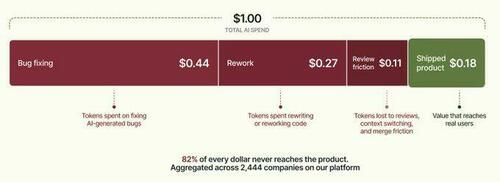
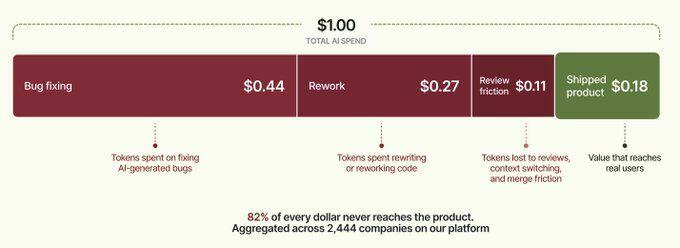
Last month we noted that the AI narrative had hit a serious snag, after Uber's COO Andrew Macdonald admitted the company couldn't draw a line between exploding token consumption and useful product output. This, after 5,000 engineers burned the entire 2026 AI budget by April. Data spanning 2,444 companies suggested only 18 cents of every AI dollar reaches users as stable product, with 44 cents going to fixing bugs the AI itself introduced.
Then came the $500 million mystery bill - an unnamed enterprise client, per Axios, torching half a billion dollars on Claude in a single month with no usage caps - landing the same week Amazon nuked its internal leaderboard and an SVP begged staff not to use AI for the sake of using AI.
Then, in Part II of our reporting: 'From Singularity To Tokenomics,' we noted that the subsidy formally ended: GitHub flipped Copilot to usage-based billing on June 1 - the same morning Anthropic confidentially filed its draft S-1 - and developers hit their monthly quotas before lunch. OpenAI, Google, and Microsoft all executed the same flat-rate-to-meter pivot within sixty days of each other. Sam Altman conceded that cost went from a non-issue in January to, in his words, a huge issue and a meme.
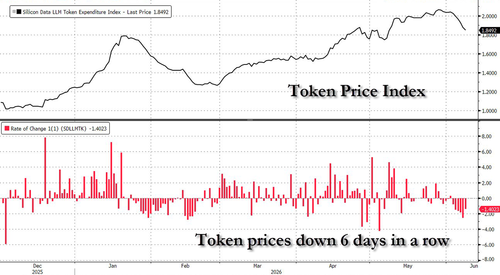
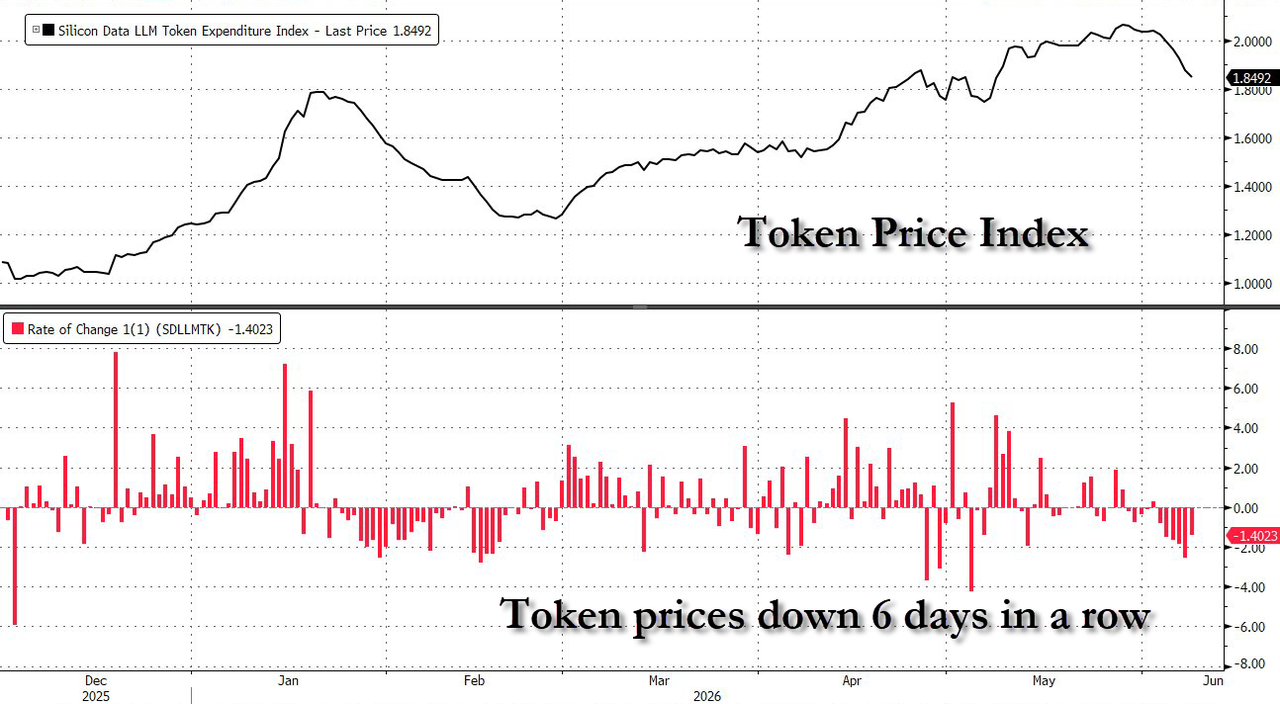
By Monday, Goldman's one-delta desk was flagging that the Silicon Data Token Spending Index had started to soften - Q1 may have been peak token-maxxing-as-KPI - and Citrini Research had coined the inevitable sequel: in a matter of weeks, the narrative went from tokenmaxxing to tokenpanic.
We're happy everyone is now looking at this chart... You're welcome?
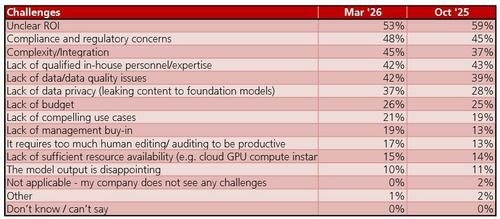
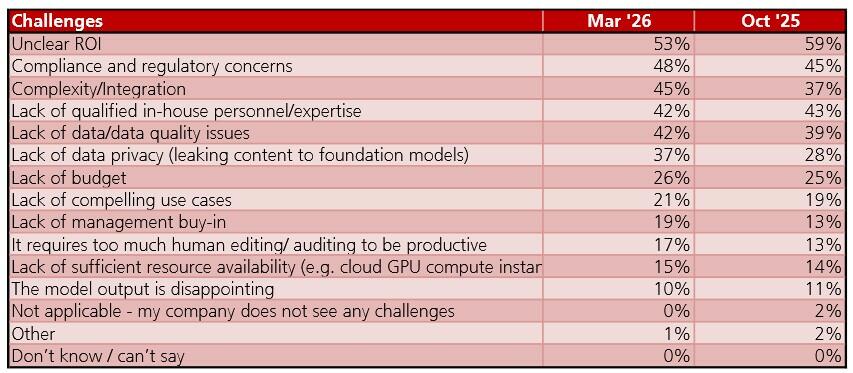
Fresh comments from UBS paint an interesting picture. After polling actual IT execs at enterprise AI customers, the bank reports that token costs have become a real issue for roughly60% of the enterprises they spoke to - "this is not a made-up media story," in the bank's own words. One customer described the GitHub Copilot pricing change in a single word: "chaos." Another got their first AI bill and heard leadership say, flatly, "we don't have the money for this." A third admitted: "we overbuilt in certain areas and are starting to feel the wrath."
Butbears should pay attention to this part: not a single check was slamming on the AI brakes. UBS found the dominant behavior is guardrails, not retreat: caps, alerts, model-downshifting, pooled tokens - normal enterprise cost-containment. Several customers explicitly refused to throttle usage ("we don't want to throttle them... our aim is to just get our employees to start using AI") and are instead cannibalizing other IT spend - cutting external IT services, consolidating cloud, and notably, metering headcount growth - to make room for the AI line item. Even Uber, the poster child for budget incineration, has set per-engineer token caps around $1,500 a month - which, as UBS dryly notes, is still extremely high - and its CEO describes the company as full steam ahead.
So according to UBS, costs have been spiking because adoption is ramping, not because per-unit prices are inflating - the per-unit cost of intelligence is falling. Which is exactly Zito's "cost per unit of IQ" point.
Both things are true
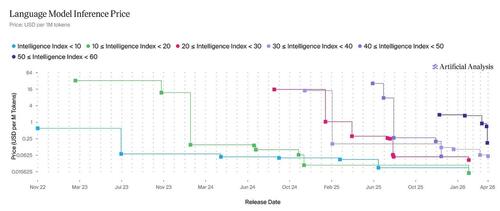
So is tokenmaxxing "a lot of BS"? Zito is right about the denominator. Cost per unit of intelligence is collapsing, relentlessly. Open-source and Chinese models deliver near-frontier capability at 10-25x lower cost; Cursor's new model matches frontier coding performance at a tenth the price per task. Measured per unit of IQ, this is the most deflationary technology in living memory.
The CFOs are right about the numerator. Gartner has found that even a 90% collapse in inference costs won't make enterprise AI cheaper, because agents devour tokens faster than prices drop and providers don't fully pass the savings through. It is also the lived experience of every company in the UBS checks. A collapsing unit cost times an exploding unit count is still a bigger bill.
Token expenditure is a meaningless productivity metric and a decisive revenue metric. Nobody underwriting a near-trillion-dollar AI IPO can dismiss it as a measure of revenue durability. That is why the rollover in the Silicon Data index is worth watching: the chart measures nothing about value created, and everything about the thing the valuations are built on.
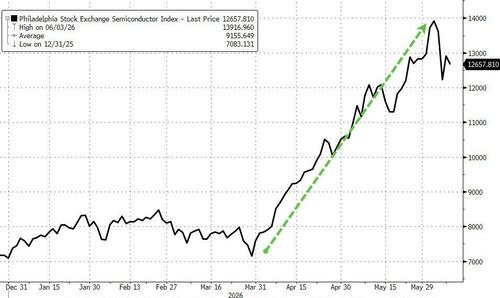
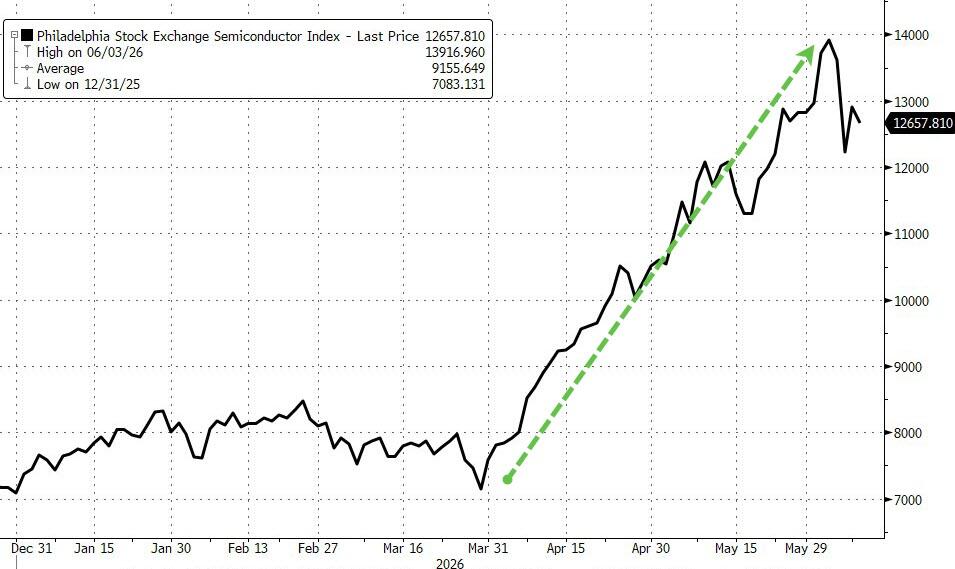
The same logic applies to the narrative itself. Zito calls the token talk noise; that noise doubled the market value of the semiconductor industry in two months on the way up and is unwinding it now. A fundamental investor can dismiss what a narrative measures. A trader cannot dismiss what it moves.
The unresolved question for traders: The infrastructure complex is priced for token demand going up and to the right at the frontier - Goldman's 24x by 2030. But if Zito's use-case economy arrives, a large share of that volume migrates to commodity inference: cheap chips, open models, local hardware. Volume can keep growing while the dollars - and the margins - pool somewhere other than where today's valuations assume. The UBS checks already show the mechanism in motion: enterprises aren't cutting AI, they're cutting around AI, and routing down-market wherever good enough will do.
Meanwhile, the token expenditure index printed its sixth straight down day - the longest streak since January - with Citadel's read attributing the drop to adoption becoming "less about what frontier models can do and more about the price," a shift toward cheaper models. Note what that means for the chart: six red days on an expenditure index isn't necessarily usage falling - it may be the deflation itself arriving in the spend line, the same work bought cheaper. The numerator and the denominator, colliding in one print. And savor the garnish: Citadel is one of the two firms Zito named as gladly paying anything for the frontier - and it's their desk narrating everyone else trading down.
Token prices down 6 days in a row: longest streak since January.
"Adoption is becoming less about what frontier models can do and more about the price... the recent drop in the token index may reflect some of this shift toward cheaper models"- Citadel
Mexico said Tuesday it would temporarily suspend imports of certain live animals from the United States following the detection of multiple cases of the flesh-eating New World screwworm in Texas and New Mexico.
The decision was made in coordination with the U.S. Department of Agriculture (USDA) and covers imports of cattle, ruminants, pigs, sheep, goats, songbirds, and ferrets, according to Mexico’s agriculture ministry.
The ministry said health authorities, including the USDA’s Animal and Plant Health Inspection Services, also agreed to strengthen health inspections of imported pet dogs at Mexico’s points of entry and assess additional measures to verify their health status.
The measures were intended to protect livestock in the northern states of Mexico, particularly in Baja California, Baja California Sur, Chihuahua, Sinaloa, and Sonora, where no screwworm cases have been recorded, it stated.
The ministry said health officials from both nations would continue to exchange information “in order to identify goods that do not pose a health risk and to establish the measures and conditions that will allow, in due course, the orderly and safe resumption of bilateral trade.”
The USDA said in a notice on its website, updated on June 8, that the suspension of live animal exports will take effect immediately “until we have further information from Mexico.”
Five screwworm cases have been confirmed in the United States, with the latest being reported in La Salle County, Texas, on June 9. The USDA said it is working with state partners in Texas and New Mexico to lead “an aggressive response” to the pest.
Among the confirmed cases was one involving a dog in New Mexico, the state’s first New World screwworm case. The veterinarian who reported the case was based in Texas, but the dog resides at a household in Lea County, New Mexico, according to the agency.
Affecting Humans
According to the Centers for Disease Control (CDC), at least seven people have died from screwworm infections in Central America and Mexico as of Jan. 20.
This month, the CDC reported more than 185,000 cumulative animal cases in the same geographic areas, and more than 2,100 cases in people.
In the United States, one human case was reported at a Maryland hospital last August after a person returned from a visit to El Salvador.
To eradicate the spread of screwworms, the USDA said it has established a 20-kilometer quarantine zone with movement controls and heightened surveillance around confirmed detections. The agency is also releasing sterile flies in and around the infestation area.
Texas Gov. Greg Abbott last week ordered the mobilization of all state personnel, including those from Texas’s University Systems, to accelerate the shipment of sterile flies into Texas and the construction of a sterile fly production facility in Edinburg.
New World screwworms are flesh-eating parasites that infect livestock, wildlife, and, in rarer cases, humans. Screwworm fly maggots burrow into the living tissue of animals, causing severe wounds that can be fatal.
Signs and symptoms of screwworm infestations include irritated behavior, head shaking, a decaying odor, and the presence of maggots, or fly larvae, in wounds, according to the USDA.
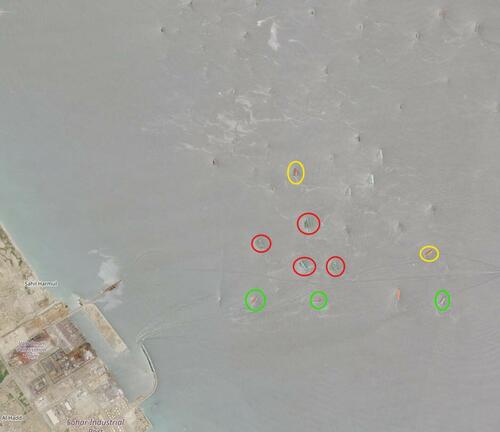
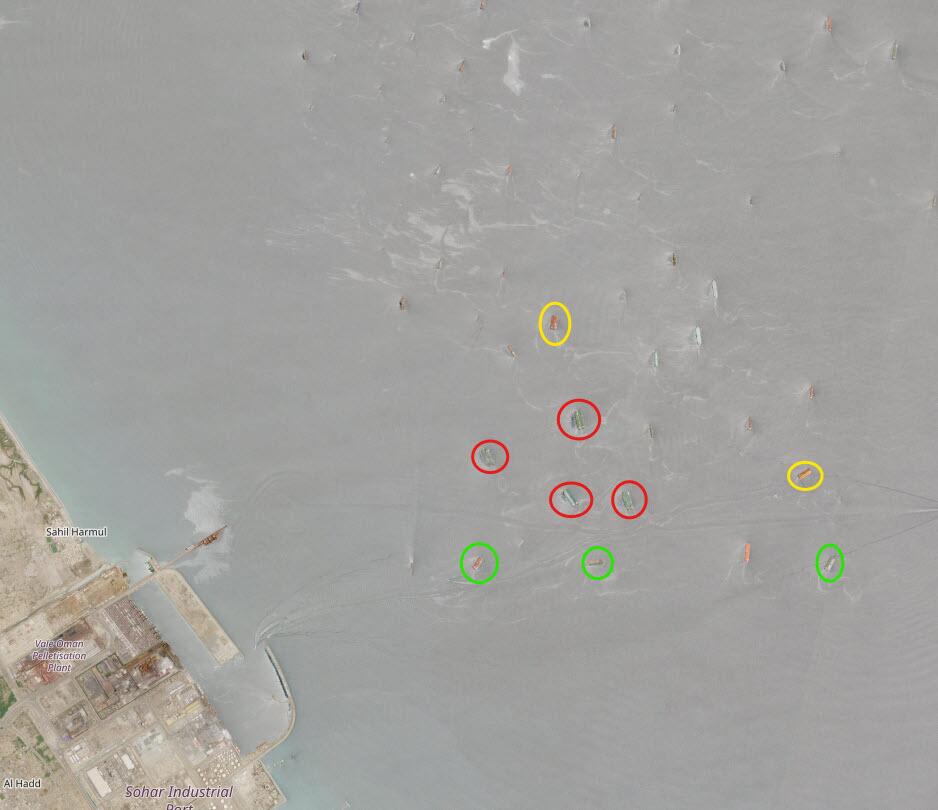
According to Bloomberg, off the coast of Oman over the weekend, 16 tankers clustered together to transfer millions of barrels of oil that had been stranded in the Persian Gulf. A month ago, that area had been entirely empty.
They’re part of a growing number of tankers that are turning their transponders off to lift oil flows through the Strait of Hormuz from a trickle to a stream. While conventional vessel-tracking data show little change in shipments, senior shipping executives, Asian oil buyers and satellite images paint a different picture: That Hormuz is now a lot less blocked, with transits becoming more steady and greater in volume.
As we reported last week, the increase in Gulf producers’ ships going dark to sneak through undetected by Iran is at the heart of the rise in flows, coinciding with a period where the US has been helping ships navigate through the waterway. The recent volumes add to signs that the oil market is managing to route enough to buyers and avert a price surge as the Iran war causes the biggest supply disruption in oil market history.
Commenting on the growing number of stealthy ship transits, earlier today Goldman's Delta One head, Rich Privorotsky, said that "a lot has been thrown at the oil market and it’s simply not going up, which is remarkable given the level of escalation. The only conclusion that really fits the price action is that barrels are still getting through the Strait of Hormuz, visibly or otherwise. There doesn’t seem to be a more rational explanation."
Middle East producers have been using vessels they control to ferry barrels outside of Hormuz - avoiding the stratospheric fees that would be commanded by the small number of shipowners willing to transit. After exiting, they then transfer oil onto tankers that take the cargoes to buyers in Asia and elsewhere.
The weekend transfers off Oman were identified by satellite imagery from the European Union’s Copernicus browser. TankerTrackers.com Inc., which tracks vessels using satellite images, said it identified 12 ships with non-Iranian Middle Eastern barrels conducting transfers outside of Hormuz on June 6 alone.
“This is oil coming from Iran’s Arab neighbors,” TankerTrackers.com said. “Yet another reason why oil isn’t $200 a barrel right now.”
“There’s an increase in trends as we’re observing,” said Larry Johnson, head of freight at commodity trader Mercuria Energy Group. “They’re mainly or exclusively government-owned ships that are making it through,” he said, adding that those vessels “seem to have channels of communication and means of securing safe passage somehow, some way.”
At least some of the ships that have crossed are doing so under the cover of darkness, and with lights on board switched off, Bloomberg said citing sources. Crews have also been instructed to stay off the radio.
About 2 million barrels a day of oil and related products are now flowing out of the Gulf, according to Rapidan Energy Group - a level that’s far below normal, but much higher than earlier in the conflict.
As JPMorgan recently discussed in detail, those flows, coupled with a plunge in Chinese buying, surging US exports and workarounds such as pipelines running hundreds of miles across the Middle East, have helped bring oil prices down almost 30% from their peak at the height of the war.
President Trump on Wednesday said in a social media post that “lots of oil is getting out” of Hormuz. A day earlier, US Energy Secretary Chris Wright said at a conference that tanker traffic is “rising very meaningfully.”
With the prospect of more supplies, the Middle East’s main oil benchmark has steadily fallen toward pre-war levels. Before the effective blockade of Hormuz, the strait handled around a fifth of all oil supply in a global market of more than 100 million barrels a day.
Trump on Wednesday also said Iran would “pay the price” for delaying negotiations for an interim peace deal, after renewed attacks overnight put further strain on a fragile two-month truce. Trump said he retaliated against Iran for shooting down a US Apache helicopter near Hormuz.
There are other signs of more supplies getting out of the region. In recent days, both Kuwait and the United Arab Emirates have offered to sell oil outside Hormuz, indicating that barrels crossed the chokepoint. Satellite imagery show a steady run of ships loading at UAE oil terminals in recent weeks. Asian buyers are generally receiving more offers for barrels that are getting out, and expect further shipments to emerge in the coming days and weeks, according to traders involved in the market who asked not to be identified.
At least two supertankers each capable of hauling 2 million barrels of crude crossed Hormuz late last month and began signaling off the coast of Kuwait. Both are managed by Kuwait Oil Tanker Co., according to the Equasis maritime database, and neither has broadcast a signal since then. One shipowner who asked not to be identified also said it had been contracted to carry barrels transferred from Kuwaiti ships that crossed Hormuz, while others said they believed Kuwait secured transit for more than two very large crude carriers.
The bigger Kuwaiti flows follow a similar pattern that has emerged for barrels from the UAE. Abu Dhabi National Oil Co (ADNOC) sold at least 14 million barrels of its oil in a tender that concluded at the end of last week, Bloomberg reported on Monday. Those cargoes are due to start loading this month.
Adnoc is among the firms to have moved crude through Hormuz with transponders off to avoid detection, Bloomberg reported last month. The company has continued to ship barrels at a healthy rate across the strait in recent weeks, according to two people familiar with its operations, who asked not to be identified as the information is private.
Satellite images also show that ships have continued to load at some of the country’s key terminals. An oil tanker was seen loading on six of the eight days there were images at Zirku Island in May, according to Copernicus data. Prior to the war, that terminal was able to load more than 1 million barrels a day of crude and condensate, according to intelligence firm Kpler.
Before some of the most recent transits, roughly a quarter of the non-Iranian large oil tankers trapped inside the Persian Gulf had escaped, shipping data showed in late May. Around 90 are still trapped, compared with roughly 160 in early April, according to Georgios Sakellariou, a freight analyst at vessel-pool management firm Signal Maritime.
So what does it mean if a growing number of ships are exiting the gulf? Well, according to Goldman's Privorotsky, this would indicate that "Iran’s leverage over global energy markets may be far lower than many (I) assumed. If there is no credible mechanism to materially disrupt flows, then the geopolitical risk premium becomes difficult to sustain. I’ll reserve judgment, but for now the price action remains bearish, even if the headlines do not."
Still, the risk is not gone, and the Delta One trader says that a potential tripwide that sends prices spiking again is one of the two: Iran striking energy infrastructure outside its borders, or US actions moving beyond tactical degradation and toward regime change objectives.
Stellar 10Y Auction Stops Through Thanks To Surge In Foreign Demand
After yesterday's mediocre 3Y auction, moments ago the Treasury held a stellar 10Y reopening (of cusip QQ7).
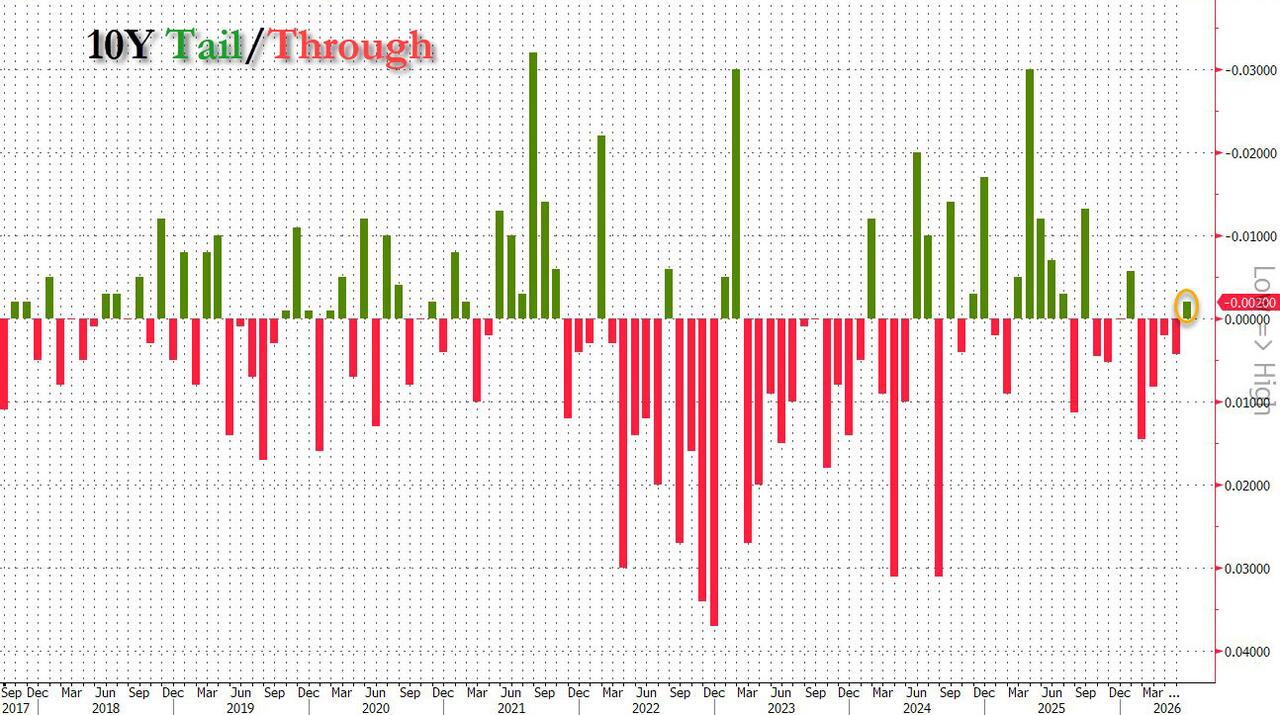
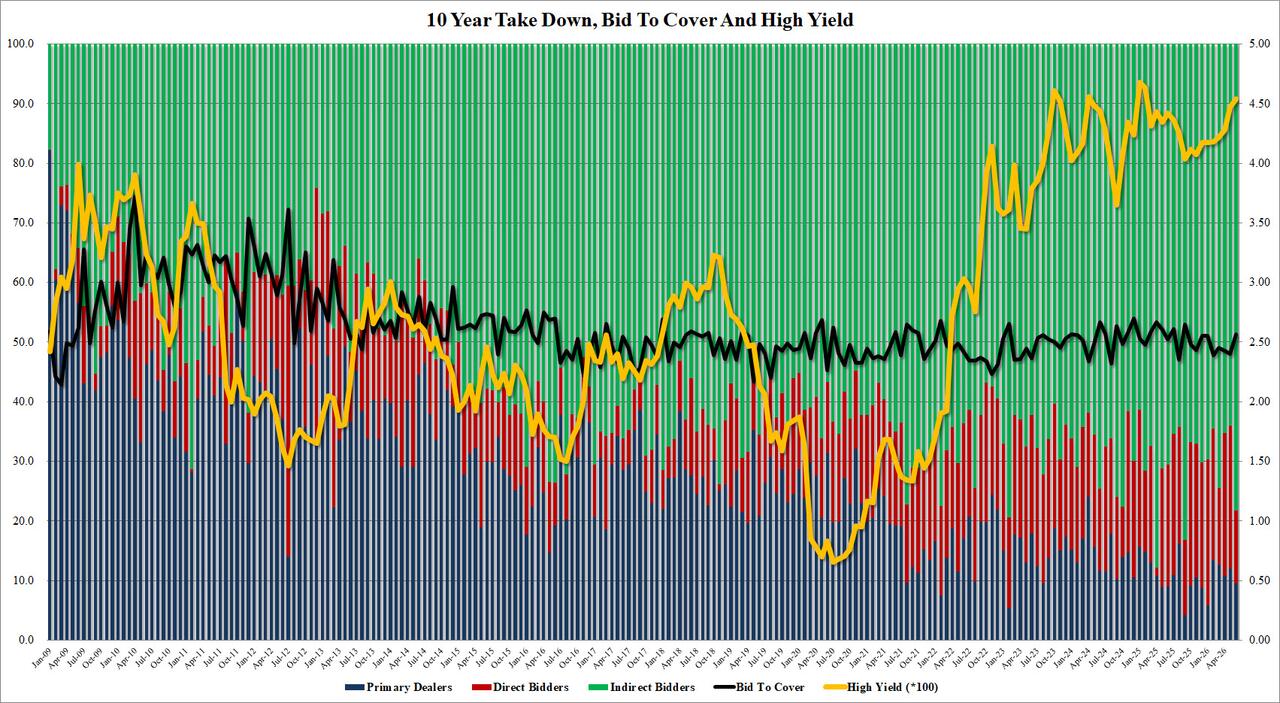
The sale of $39 billion in 9 Year-11 Month paper priced at a high yield of 4.538%, up from 4.468% last month, and 0.1bp through the 4.539% When Issued. This was the first stop through following 4 sequential tails for the tenor.
The bid to cover rose from 2.402 to 2.565, well above the six-auction average and the highest since Sept 25.
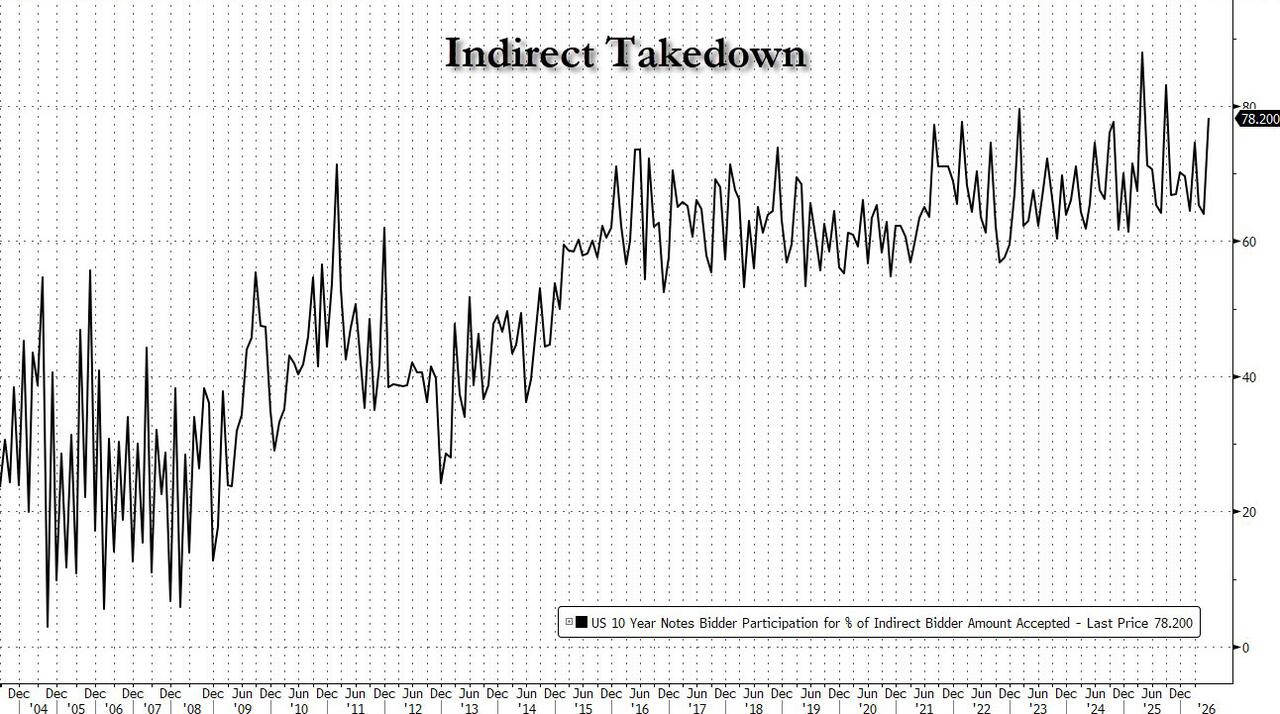
Internals were impressive: indirects surged to 78.21% from 63.95%, which was one of the 5 highest on record; the last time we saw such feverish foreign demand was in Sept 25.
And with Directs sliding to just 9.5%, the lowest since January, Dealers were left with 12.32%, far below the 21.39 recent average.
Overall, this was a stellar 10Y auction, a big improvement to yesterday's 3Y (which wasn't bad), and a sign from the bond market at least that today's CPI was nothing to be concerned about.
В команде конструкторов Формулы-1 Williams разразился скандал после того, как новый глава команды, Джеймс Воулз, обнаружил, что вся документация по болидам, состоящим из 20 тысяч деталей, ведётся в одной запутанной Excel-таблице. Воулз рассказал, что при попытке внести изменения в таблицу или обновить информацию, она просто рушится. Издание Ars Technica пишет, что из-за неразберихи в Excel команда Williams уже терпела фейлы и пропускала предсезонные тесты. Рабочим приходилось буквально вручную перерывать склады с запчастями, чтобы подготовить болиды и найти нужные детали.
Ars Technica отмечает, что случай Williams не уникальный. С такой же проблемой сталкивалась команда Renault. Её новый глава в 2017 году тоже боролся с Excel-таблицей на 77 000 строк, в которую запихали документацию по деталям. А всё из-за того, что команды F1 хоть и вкладывают сотни миллионов долларов в разработку машин, они бывают довольно консервативны и со скрипом переходят на новое ПО.
Сили безпілотних систем у взаємодії з 1-м корпусом НГУ «Азов», СБУ і ЦСО «А» уразили об’єкти Маріупольського морського торговельного порту
Порт використовувався противником для військової логістики, а також незаконного вивезення українського зерна, вугілля та металу до росії.
Унаслідок ураження (https://t.me/azov_media/8461) пошкоджено енергетичну, ремонтну та управлінську інфраструктуру порту, а також об’єкти, що забезпечували роботу портової логістики.
У результаті атаки порт знеструмлено. Можливості противника використовувати Маріуполь як логістичний вузол суттєво обмежені.
Системні удари по об'єктах воєнної та ресурсної інфраструктури противника триватимуть доти, доки рф продовжуватиме збройну агресію проти України.
THE LAW SCHOOL ACCOMMODATIONS RACKET. This is a huge problem at all sorts of schools. Are you the chump if you’re not taking advantage of it? I wonder…
A series of shocking videos show homeless residents on Los Angeles’ Skid Row claiming they were paid to vote for Mayor Karen Bass and councilwoman Nithya Raman.
The California Post obtained copies of the videos after they were published Tuesday on the TikTok account LaneNeedsSpencerPratt.
The footage, recorded near 7th Street and Flower Street in downtown Los Angeles on Tuesday morning, has since been provided to the Department of Justice. It also follows The Post’s revelations that thousands of homeless voters were registered to shelters where they didn’t live.
One shelter in Venice, where 185 Raman voters were registered, received $600,000 from taxpayers care of the socialist Raman.
In one of the clips, a man who calls himself Kevin Shepherd, claimed he received $4 to vote for Bass.
When asked whether he would also have been paid to vote for Raman, Shepherd answered “yes” and said Spencer Pratt was not among the candidates he was encouraged to support.
As a result of the primary’s outcome, America’s Newspaper of Record compares and contrasts the difficult choice that L.A. residents will be facing this fall:
It’s official: The guy who knowingly got a Nazi tattoo on his chest and roughed up his girlfriend is now the Democrats’ nominee in Maine. Graham Platner has won his primary and will now face off against Susan Collins in November.
The same people who called the Right Nazis for 10 years, who accused the Right of sending women back to the dark ages, who called Trump a rapist and pedophile protector, and who claim Trump is sending soldiers to die, are now backing a guy with an actual Nazi tattoo, who twisted his ex-girlfriend’s arm and left bruises, who spent years on a sexting site notorious for hosting predators cheating on his wife, and who has relentlessly mocked veterans.
It’s truly amazing. Yet it goes beyond just the hypocrisy of it all.
There’s a Wall Street Journal video that’s gone viral of an interview with Daniel Moraff and Leanne Fan, the activists who handpicked Graham Platner and convinced his to run for office. The activists had uncovered some of Platner’s gross Reddit posts but told the WSJ didn’t find them disqualifying.
“Part of our thesis here is that people do not want their candidates grown in vats. They want people who are real human beings,” Moraff says.
This video is turning me into a burn-it-all-down populist ready to toss out the arrogant political elites (these Ivy League ex-Bernie staffers who recruited Graham Platner). pic.twitter.com/8VuPrZ8hgc
Roughing up your girlfriend makes you a “real human being.”
Apparently, this is how you get back the white working class! This is how you get back men, according to Daniel Moraff and a host of other progressive college-educated pundits and nepo baby activists.
As “Cynical Publius” tweeted at the start of the month:
Consider the possibility that the DNC saw Graham Platner’s Nazi affiliation to be a PLUS.
Maine is a swing state and Collins is practically a Democrat. They can’t run to the left of Collins, not really.
So maybe they want to run to the RIGHT of Collins, and since these…
Tweet concludes, “So maybe they want to run to the RIGHT of Collins, and since these idiots ACTUALLY BELIEVE we are all actual Nazis, maybe they saw Platner as the ideal candidate. Because they are stupidly brainwashed. Just a theory…”
That theory seems confirmed by Bill Maher, who told viewers last week, “I mean [Platner] is a new kind of guy and it is not just in the Democrats, people who, like—if you look at their history, you can find things that make them look very conservative. Like a Nazi tattoo. What I would—in the past—associate with conservatives.”
It was the best of Bill Maher and it was the worst of Bill Maher. First, the worst, on Graham Platner "I mean this is a new kind of guy and it is not just in the Democrats, people who, like—if you look at their history, you can find things that make them look very conservative.… pic.twitter.com/LsSLyOUoGU
For the record, outside of a few stereotypical motorcycle gang members on TV cop shows, I don’t recall ever seeing anyone on the right with a Nazi tattoo, but I’ll admit to leading a very sheltered life. The Nazi tat aside (and those are three words I never thought I’d type in a row):
Just as Trump was the Republican Party's answer to Obama, Platner is now the Democrat answer to Trump. And the next cycle, it'll only get worse.
I do continue to crack up at this idea that Democrat politician moral fiber was so high at some point. When I started working, the Senate Democratic caucus was home to Sen. Killed That Girl in Chappaquiddick, Sen. Waitress Sandwich, and Sen. Klan Member https://t.co/g9hD93ueSQ
Израильтяне показали лазер, способный сбивать более 30 дронов в минуту
Компания Esh-Tech представила систему DroneLight, которая, по заявленным характеристикам, способна уничтожать БпЛА на расстоянии до 1 км и эффективно бороться даже с роями дронов.
Разработчики утверждают, что на поражение одной цели требуется всего 1-2 секунды, а энергопотребление системы примерно в пять раз ниже, чем у большинства существующих боевых лазеров.
Первые комплексы планируют поставить заказчикам уже в сентябре.


![[syndicated profile]](https://www.dreamwidth.org/img/silk/identity/feed.png) insta_feed
insta_feed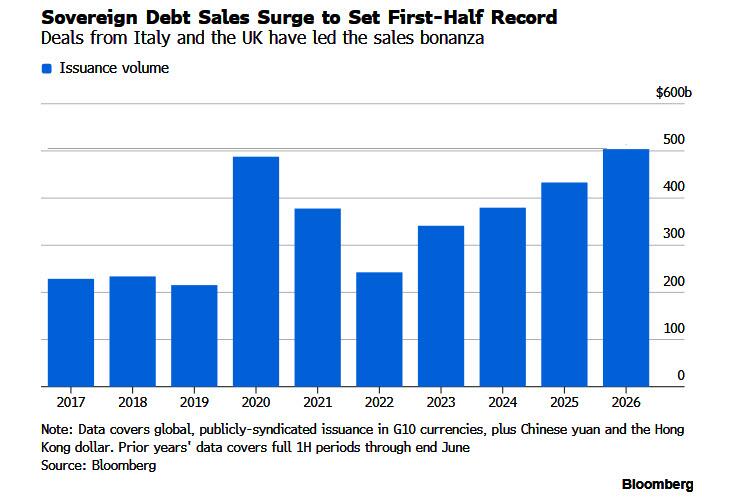





![[personal profile]](https://www.dreamwidth.org/img/silk/identity/user.png) mikerrr
mikerrr

 © УНИАН - новости Украины | война с Россией | новини
 На стартову сторінку